- Only 48% of mobile pages and 56% of desktop pages pass all three Core Web Vitals in 2025, and position-1 results are about 10% more likely to pass than position 9 (Web Almanac / CrUX, 2025).
- Glassmorphism stays relevant into 2026, but designers now pair it with accessibility and performance rather than treating it as pure decoration.
- A 3D WebGL background can coexist with good Core Web Vitals — if the theme lazy-loads, preloads the LCP image, and trims unused scripts.
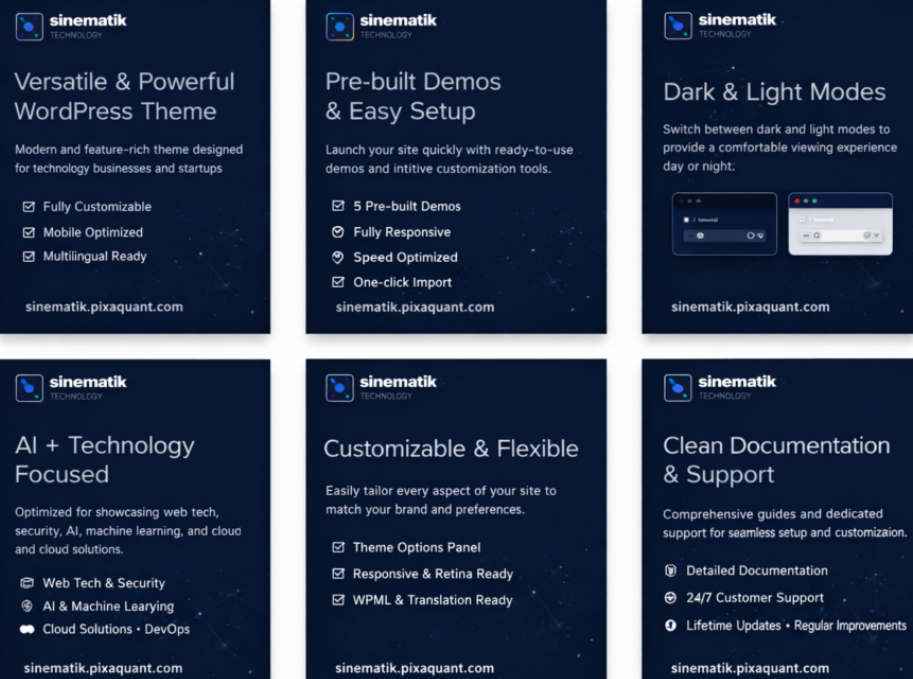
- Sinematik, PixaQuant’s in-development WordPress theme, ships glassmorphism, an optional Three.js background, RTL support, and schema out of the box. Preview the documentation →
Glassmorphism and 3D backgrounds make a site feel modern — until they make it slow. In 2025, only 48% of mobile pages and 56% of desktop pages passed all three Core Web Vitals, according to the Web Almanac. Since Google treats those metrics as a ranking signal, a beautiful theme that ships with a heavy particle animation and unoptimized images can quietly cost you both speed and search positions. This guide covers how modern WordPress themes balance glass UI, 3D effects, accessibility, and performance — and where PixaQuant’s Sinematik theme fits in.
Is Glassmorphism Still a Trend in 2026?
Yes, but the conversation has moved on from pure aesthetics. Coverage of 2026 design trends from Idea Kraft and wider industry analysis frames the next phase as “adaptive glass UI” — frosted-glass surfaces and vibrant accents that respond to context, paired with real attention to legibility and contrast.
That shift matters for WordPress themes. Early glassmorphism relied on translucent panels sitting over busy hero images, which often failed contrast checks and hurt readability. The 2026 version keeps the look — soft blur, gradient borders, layered depth — but holds text crisp enough to pass accessibility guidelines.
Here’s the part template shoppers usually miss: glassmorphism isn’t one effect, it’s three stacked together — a translucent surface, a background blur, and a subtle border highlight. Each one has a cost. The surface is cheap. The blur is expensive on low-end GPUs. The border is nearly free. Themes that perform well put the blur only where it earns attention, like navigation and cards, and skip it on full-bleed sections.
Can a 3D Background Still Pass Core Web Vitals?
It can, with discipline. The 2025 Web Almanac, summarized at corewebvitals.io, found just 48% of mobile pages pass Core Web Vitals, and CrUX data cited by shno.co shows position-1 pages are about 10% more likely to pass than pages at position 9. Google’s own documentation confirms Core Web Vitals are a ranking factor. Speed is now a competitive edge, not a nice-to-have.
A Three.js particle background sounds like a performance liability, and an unconfigured one is. But a well-built theme controls the damage: it lowers particle counts on mobile and tablets, skips the effect on devices that can’t handle it, and keeps the 3D canvas off the critical rendering path so the Largest Contentful Paint (LCP) image loads first.
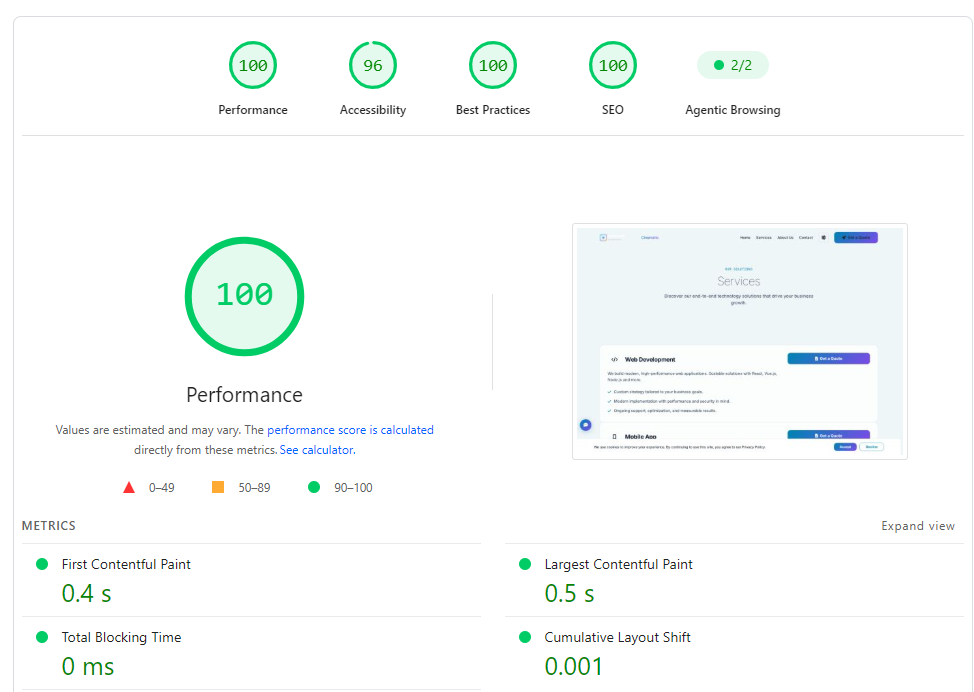
When we built Sinematik at PixaQuant, we left the 3D background fully optional and gave it device-aware defaults — fewer particles on phones, more on desktop, and a one-click toggle to turn it off entirely. The goal was a theme that looks striking on a fast laptop and still loads cleanly on a mid-range phone over a slow connection.
With LiteSpeed Cache Plugin Default Preset: https://pagespeed.web.dev/analysis/https-sinematik-pixaquant-com/37gbluirzi?form_factor=mobile
What About Accessibility and Right-to-Left Languages?
Glass UI has an accessibility tax if you ignore it. Translucent panels over images can drop text contrast below WCAG thresholds, and animated backgrounds can be a problem for users sensitive to motion. A serious theme ships the look with a `prefers-reduced-motion` path and contrast-safe defaults, then lets the site owner dial the effects back.
Right-to-left support is the other quiet differentiator. Many themes claim RTL readiness but only flip a few elements. A genuinely RTL-ready theme ships a dedicated stylesheet that mirrors navigation, footers, breadcrumbs, pagination, and forms — so an Arabic or Hebrew version feels native, not retrofitted.
How Do You Keep a Glass Theme Fast?
Performance is a stack of small decisions, not one trick. Modern WordPress themes that hold Core Web Vitals tend to share the same habits.
- Preload the LCP image so the largest visible element paints first, protecting your LCP score.
- Lazy-load below-the-fold images with `loading=”lazy”` and `decoding=”async”`, and mark the first image with `fetchpriority=”high”`.
- Self-host fonts with `font-display: swap` to avoid layout shift and third-party requests.
- Trim default payload — remove emoji scripts, jQuery migrate, and version query strings that bloat requests.
- Lower JPEG quality slightly (around 82) for a better size-to-quality balance on photography-heavy listings.
- Send security headers and a clean virtual robots.txt from the theme, not a pile of plugins.
None of that is glamorous, which is exactly why most themes skip it. Together, these choices are what separate a 48%-pass-rate theme from one that lands in the fast half of the web.
What Does This Look Like in a Theme? Meet Sinematik
Sinematik is PixaQuant’s in-development WordPress theme for technology companies and digital agencies. It takes the 2026 glassmorphism direction — dark surfaces, cyan and purple accents, frosted panels — and builds it on the performance and accessibility habits above.
The theme runs on WordPress 6.0+ with PHP 7.4+, and integrates with WooCommerce and Elementor for agencies that need commerce or builder workflows. Customizer controls expose every section: colors, hero, statistics, contact details, social links, footer layout, and toggles for dark mode, the 3D particle background, and a cookie-consent banner. Page templates cover Front Page, Services, About Us, and Contact.
Under the hood, Sinematik ships the performance stack by default: LCP image preloading, lazy images with high-priority on the first image, self-hosted fonts, security headers, a custom robots.txt, and emoji/jquery-migrate removal. Accessibility and reach get equal treatment: a full RTL stylesheet, schema.org structured data (Organization, BreadcrumbList, Article), Open Graph and Twitter Card tags, and built-in breadcrumbs. For developers, the theme exposes action and filter hooks, shortcodes, block patterns and styles, and a ready-to-use child theme. Sinematik is currently in development; you can read the full documentation — installation, customization, hooks reference, FAQ, and support — on our docs site.
Frequently Asked Questions
Does glassmorphism hurt website performance?
The translucent surface itself is cheap; the background blur is the expensive part. Themes that perform well limit blur to navigation and cards, skip it on full-bleed sections, and keep the effect off the critical rendering path so the LCP image loads first.
Can a WordPress theme with a 3D background pass Core Web Vitals?
Yes, if the 3D canvas is optional and device-aware. In 2025 only 48% of mobile pages passed all three Core Web Vitals, so a theme that lowers particle counts on mobile and preloads the LCP image can still land in the fast half.
Is glassmorphism accessible?
It can be, with the right defaults. Crisp text over translucent panels, a `prefers-reduced-motion` fallback for animated backgrounds, and contrast-safe colors keep glass UI within accessibility guidelines while preserving the modern look.
Conclusion: Modern Without the Slowdown
The themes that win in 2026 are the ones that pair striking design with the unglamorous performance work most templates skip. Glassmorphism and 3D backgrounds still define a modern feel — but only when they ship with LCP preloading, lazy images, self-hosted fonts, RTL support, and schema.
That balance is what Sinematik is built around: a glassmorphism WordPress theme that doesn’t trade Core Web Vitals for looks. It’s in active development, and the full Sinematik documentation — installation, customization, hooks, FAQ, and support policy — is the best place to see how it works.
Demo URL: https://sinematik.pixaquant.com/